




Get free consultation
Fill out the form and we will contact you
Australia’s weather has many differences from Vietnam, primarily because the country is located in the Southern Hemisphere. When Vietnam and many Northern Hemisphere countries enter summer, Australia is experiencing winter. Differences in geographical location, vast territory, and diverse terrain mean that the climate across Australia is not uniform.
This is something Vietnamese travelers should research before visiting Australia. At the same time of year, Sydney may be cool, Darwin hot and humid, while inland areas experience large temperature differences between day and night. Understanding Australia’s weather will help you choose the right travel time, prepare clothing, and plan your itinerary more effectively.
Australia lies entirely in the Southern Hemisphere, so its four seasons are opposite to those in Vietnam. This is the most noticeable difference when learning about the country’s climate.
If Vietnam enters summer around June to August, Australia is in winter. Conversely, December to February is summer in Australia.
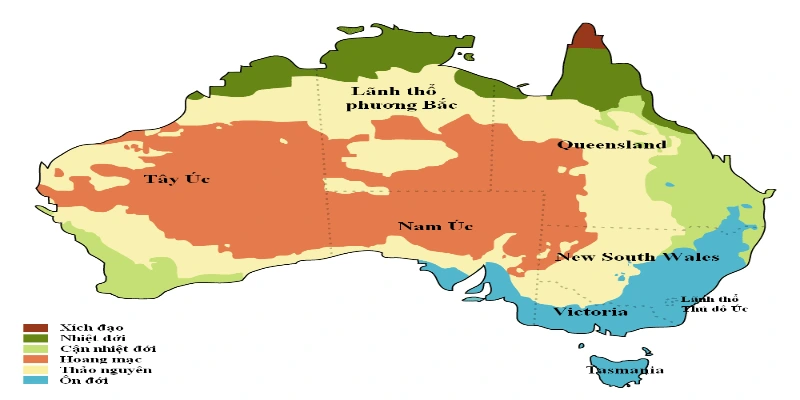
However, it’s important not to assume that the entire country shares one climate. Australia is vast, stretching across many latitudes and featuring varied terrain. As a result, weather differs significantly between the north, south, coastal regions, and inland areas.
Northern regions tend to be hotter and strongly influenced by tropical climate. Meanwhile, the south experiences colder winters. Inland areas are typically dry, with daytime and nighttime temperatures differing considerably.
According to the common division, Australia has four seasons: summer, autumn, winter, and spring. The timing of these seasons is opposite to Vietnam.
Australia’s summer lasts from December to February. This is often the time many travelers choose to explore coastal cities, relax at resorts, and join outdoor activities. Temperatures vary greatly across regions. Southern coastal cities usually enjoy more pleasant weather compared to inland areas.
One important note is that deep inland regions of Australia can be extremely hot during summer. Therefore, if your itinerary includes desert areas or places with little greenery, you should prepare water, sunscreen, hats, and suitable clothing.
Summer is also when beaches, parks, and outdoor attractions become lively and bustling. If you enjoy trips full of activities, this is a period worth considering.
From March to May, it is autumn in Australia. Temperatures begin to drop compared to summer, and the weather in many cities becomes more pleasant.
Autumn is especially suitable for those who don’t enjoy very hot weather. The cooler air makes walking, sightseeing, and exploring architectural landmarks or cities more comfortable.
A useful travel tip for this season is to prepare layered clothing. Mornings and evenings can be chilly, while daytime remains relatively warm, especially in cities with a mild climate.
Australia’s winter runs from June to August. This is often surprising for many Vietnamese travelers, as the weather in Australia is noticeably colder than in Vietnam.
In southern cities, temperatures can drop quite low. Some mountainous areas even have snow, making them popular destinations for those who want to experience winter.
However, not all of Australia is cold during winter. The northern regions remain relatively warm. This is a clear example of why checking the weather by city is more important than relying only on the season’s name.
If you’re visiting Melbourne, Canberra, Hobart, or other southern areas in winter, you should prepare coats, long pants, closed shoes, and layered warm clothing.
From September to November, it is spring in Australia. Temperatures gradually rise, and the weather in many regions becomes pleasant. This is a suitable time to explore cities, enjoy nature, and take part in outdoor activities. Many areas feature beautiful landscapes with trees and flowers, creating a very different atmosphere compared to the preceding winter.
If you’re looking for a trip that balances comfortable weather with sightseeing activities, spring can be a great choice.
>>> See also: Popular Types of Australian Tourist Visas Today and How to Choose the Right One
A common mistake when learning about Australia’s weather is to assume the country has a uniform climate. In reality, each city has its own distinct weather characteristics.
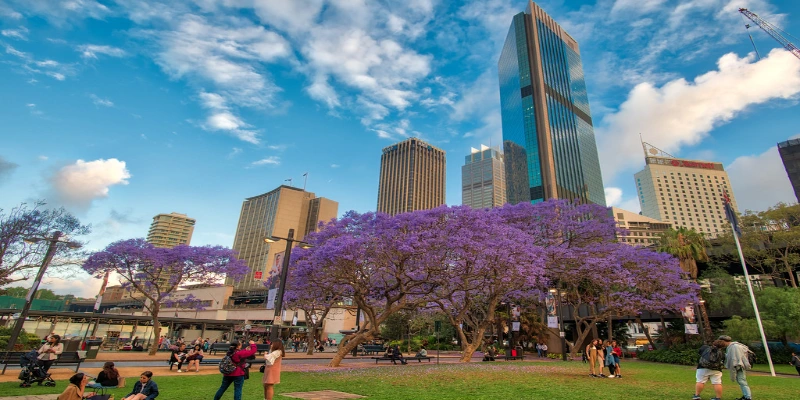
Sydney is located on the east coast and has a relatively mild climate. The city experiences warm summers and cooler winters.
If you visit Sydney in summer, you can combine city sightseeing with beach activities. Winters are usually not as harsh as in some southern regions. However, coastal weather can change quickly. Therefore, it’s best to check the daily forecast rather than relying only on seasonal averages.
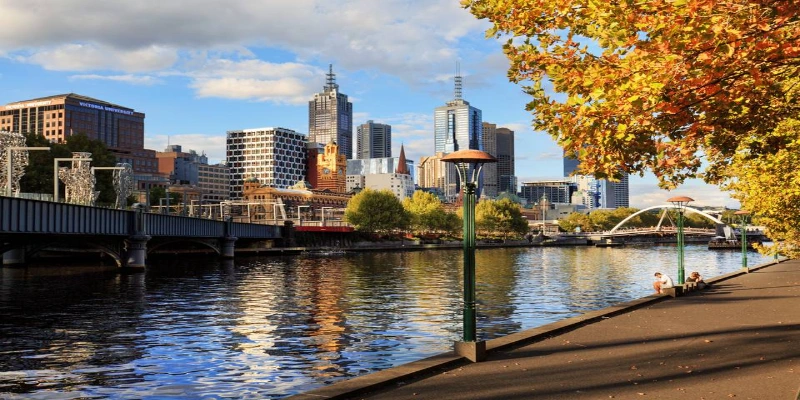
Melbourne is famous for its rapidly changing weather within a single day. Mornings may be cool, midday warmer, and afternoons often bring wind or rain. This is why experienced visitors recommend carrying a light jacket even when the morning looks pleasant.
If your itinerary focuses on city exploration, layered clothing is more practical than relying on a single outfit.
Canberra is inland and has colder winters compared to coastal cities. In summer, daytime can be quite hot, but nights are usually cooler.
Winter in Canberra can be noticeably cold, especially in the early mornings and evenings. If visiting between June and August, be sure to bring warm clothing.
Brisbane is located in southeastern Queensland and has a warmer climate than southern cities.
Summers here are typically hot and humid, while winters are relatively mild. This makes Brisbane a good destination for travelers who prefer to avoid cold weather.
Darwin is in northern Australia and has a tropical climate. Compared to Melbourne or Canberra, Darwin is significantly hotter.
>>> Xem thêm: How Much Does It Cost to Work in Australia? Expenses You Need to Prepare for Going to Australia
This region has a clear division between the wet season and the dry season. Therefore, if you plan to visit Darwin, besides checking temperatures, you should also look at rainfall and weather conditions for the specific period.
Perth is located in Western Australia and has a climate influenced by its coastal position. Summers are usually hot and dry, while winters are cooler with more rainy days.
This weather pattern makes Perth different from cities on the east coast. When planning your itinerary, it’s best to check the daily forecast.
Alice Springs is deep inland and lies in an arid region. Daytime temperatures can be high, but nights drop significantly.
Visitors here need to pay special attention to sun protection and ensure they carry enough water when joining outdoor activities.
There isn’t a single answer to this question, as the ideal time depends on your destination and travel purpose.
For trips covering multiple cities, check the forecast for each location to avoid packing unsuitable clothing.
Australia can experience extreme weather events such as heatwaves, bushfires, heavy rain, storms, or strong winds in certain regions and times. If traveling independently, you should monitor local weather warnings and safety guidelines.
Especially for outdoor activities, don’t rely solely on a nice morning forecast. Conditions can change during the day, particularly in mountainous or variable-climate areas.
A useful tip is to keep your itinerary flexible. If an outdoor activity is canceled due to weather, you can switch to museums, shopping centers, restaurants, or indoor attractions.
If you’re interested in traveling, studying, working, or settling in Australia, besides learning about the climate, make sure to stay updated on visa requirements and entry regulations. quoctichthuhai.com can be a reference source for citizenship programs, immigration, and overseas documentation at quoctichthuhai.com.
Fill out the form and we will contact you